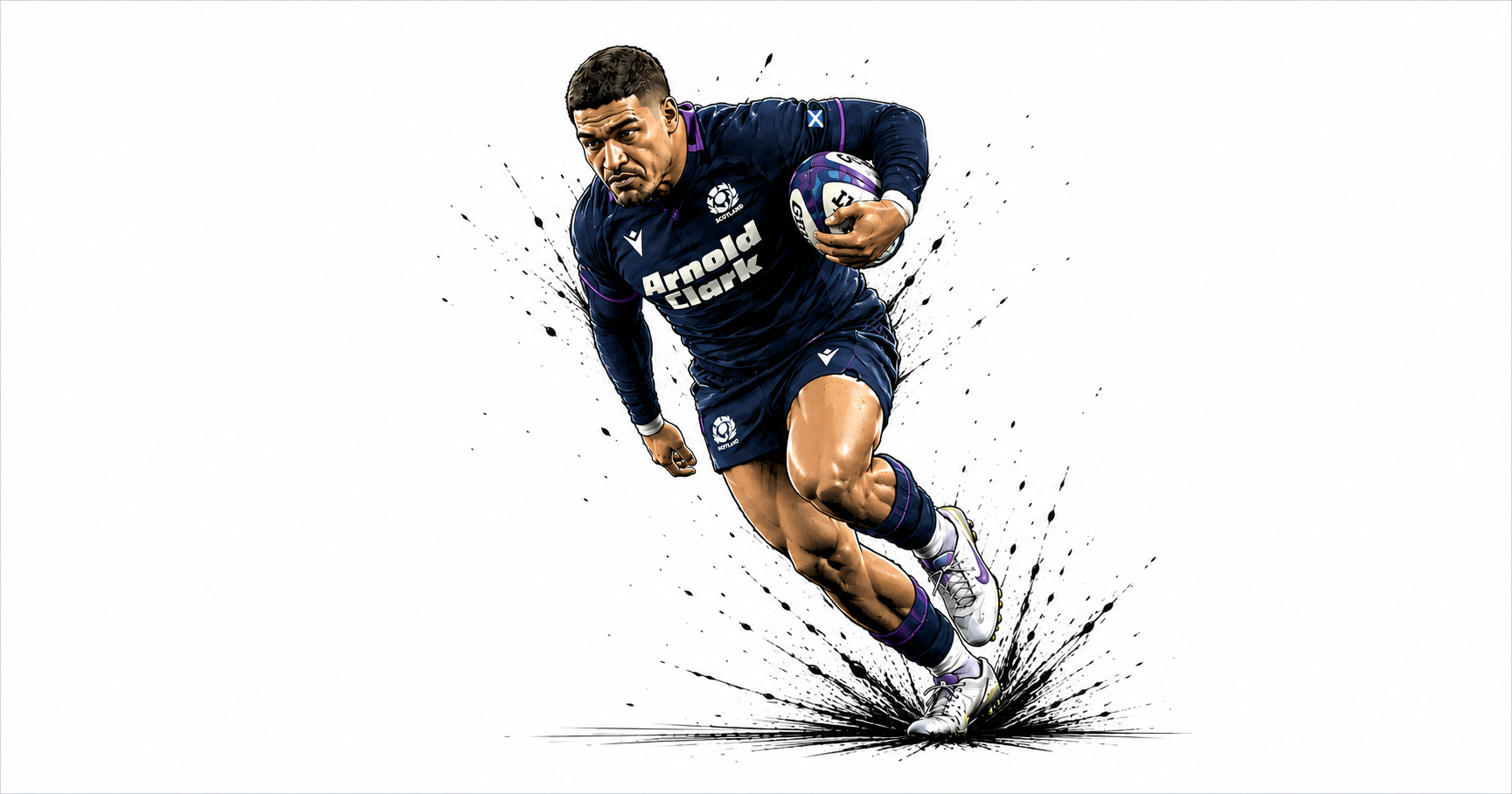
Argentina 38-47 Scotland: Shorn of Jordan, Scotland Prove They Can Adapt Under Fire
Scotland arrived in Córdoba to open the inaugural Nations Championship and, within five minutes, lost the fly-half they had built their game plan around. Rather than allowing that disruption to derail them, Scotland responded with a seven-try, bonus-point victory built on the kind of adaptability that tournaments are designed to test.
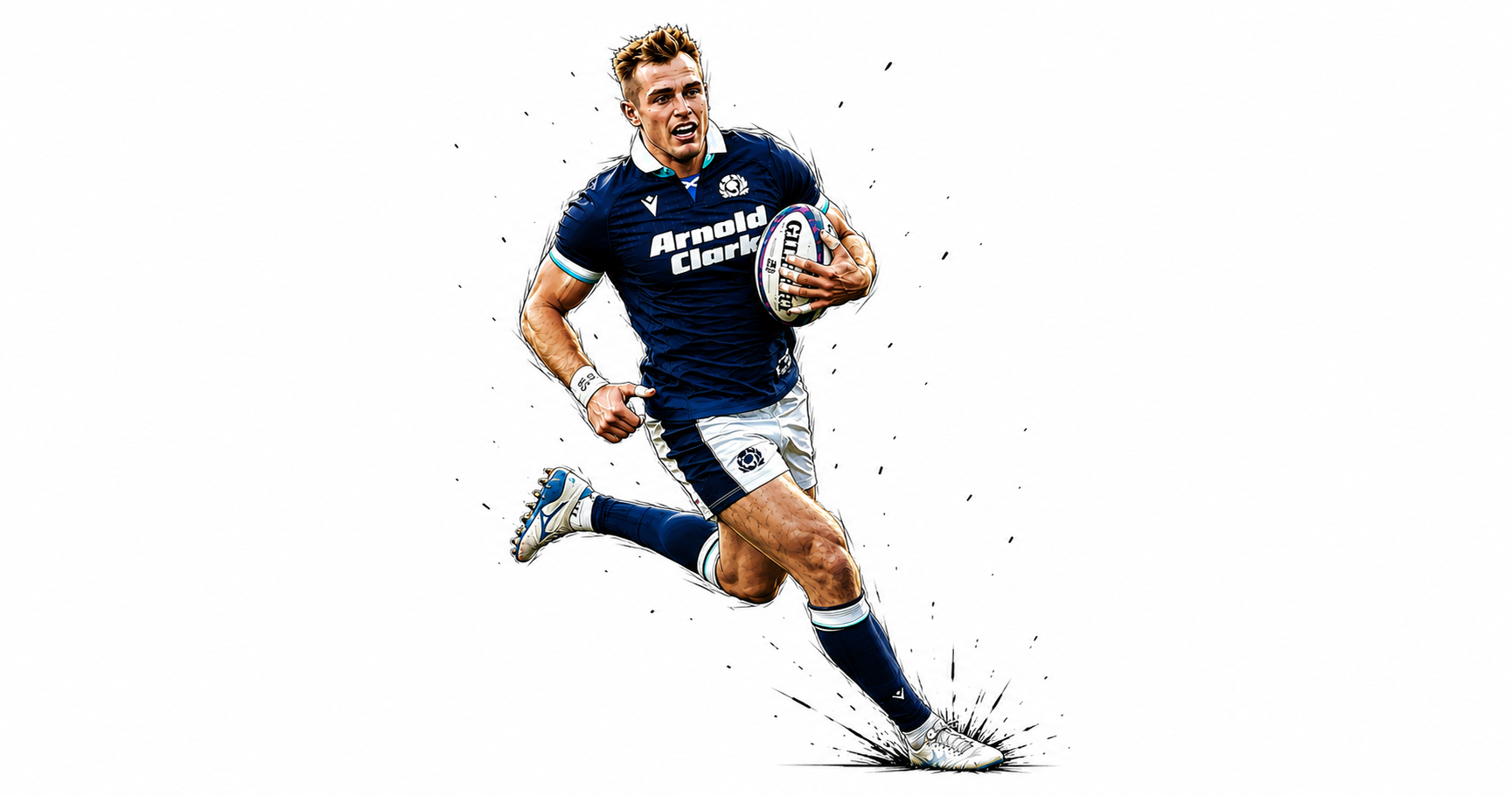
Tom Jordan’s early departure for a Head Injury Assessment (HIA) could easily have been the story that defined this match. Instead, it became the detail that explains it. Fergus Burke came off the bench, assumed the fly-half’s kicking and game-management duties, and helped steer a team that trailed early into a 47-38 win over Los Pumas at Estadio Mario Alberto Kempes. Argentina, playing at home as Matías Alemanno earned his 100th Test cap in his own city, still had enough in the second half to collect a losing bonus point. But the shape of the match belonged to Scotland’s ability to absorb pressure, replace a key figure without losing structure, and finish clinically when chances came.
A Storm Scotland Had to Weather First
The opening ten minutes gave little hint of what was coming. Argentina controlled the ball through a prolonged multi-phase attack, forcing Scotland to defend more than twenty consecutive phases before conceding anything. It was into that sequence that Jordan went off for his HIA, and six minutes in, Joaquín Oviedo finished a quickly taken lineout to put the hosts 7-0 up after Tomás Albornoz’s conversion.
For a team already managing an enforced change at fly-half, conceding first while camped in their own half was the sort of start that can unravel a game plan. Scotland’s response says as much about their composure as anything that followed. Rather than chase the game immediately, they absorbed the pressure, found their rhythm, and turned defence into the platform for everything that came next.
Seven Different Scorers, One Efficient Team
Once Scotland did get their hands on the ball, the conversion rate was startling. Sione Tuipulotu finished their first try in the 17th minute, and five minutes later Pierre Schoeman crossed after sustained pressure to give Scotland their first lead of the match. It was a particularly meaningful score, coming in Schoeman’s 50th Scotland cap. Albornoz kicked a penalty just before the half-hour to keep Argentina in touch, but Rory Hutchinson’s try in the 35th minute meant Scotland went in front at the break, 19-10.
That scoreline from limited early possession is the clearest statistical signal of the theme running through Scotland’s performance. Head coach Gregor Townsend pointed to exactly this after the match: “We took a while to get possession but once we got into our rhythm I thought we were tactically very smart. We won the games within the games and I felt our forward pack led very well.” Seven different players would go on to score tries for Scotland — Tuipulotu, Schoeman, Hutchinson, Gregor Brown, Scott Cummings, Gregor Hiddleston and Kyle Rowe — a spread that points to a team creating and taking chances across multiple channels rather than relying on one source of go-forward.
The Middle Hour: Scotland Take Control
Argentina briefly threatened to seize the initiative back three minutes into the second half, when Rodrigo Isgró crossed and Albornoz converted to cut the deficit to two points, 17-19. It proved to be the closest Argentina would get. Scotland answered emphatically, with Gregor Brown scoring in the 51st minute and Scott Cummings (marking his own 50th cap) following four minutes later. Burke’s boot had already been adding to the tally since he’d taken over the kicking duties, and with both second-half tries converted, Scotland’s lead had stretched to 33-17.
This period represents the clearest passage of the game in which Scotland’s structure held while Argentina’s search for a way back stalled. It also underlines why the manner of Jordan’s exit mattered less than it might have. Burke’s arrival helped Scotland maintain their shape at a crucial moment, and from there they built their most dominant spell.
Milestones on the Bench, Points on the Board
Scotland’s bench did more than manage the game defensively. Gregor Hiddleston, introduced as a replacement, scored on debut in the 68th minute by finishing a driving maul. It was an emphatic way to mark a first Test appearance, and Burke’s conversion put Scotland 40-24 ahead. Five minutes later, Kyle Rowe added a seventh try, with Burke converting again to make it 47-24 and put the result beyond meaningful doubt. Taken together with Schoeman’s and Cummings’ 50th caps and Alemanno’s century for Argentina, this was a match unusually rich in individual milestones. Those milestones meant even more because they came in a bonus-point win that gave Scotland an important start to the new competition.
Argentina’s Late Rally Narrows the Numbers, Not the Story
Argentina’s finish flattered a scoreline that had looked considerably more one-sided moments earlier. Trailing by 23 points, Argentina scored twice in the closing minutes. Lucio Cinti crossed in the 76th minute before replacement scrum-half Agustín Moyano added another two minutes later, with Albornoz converting both to bring the final margin back to 47-38. It secured Argentina a losing bonus point for scoring five tries, a meaningful consolation from the tournament’s points system. But it should be read as exactly that. Argentina’s late rally came after the contest had already been decided, rather than indicating that the game was ever genuinely in the balance during the final quarter. Both sides actually scored an identical 28 points in the second half, but Scotland had built and defended a substantial buffer well before Argentina’s response arrived. Cards were shared evenly through that closing stretch and had little bearing on it either. Scotland’s Jamie Dobie was sin-binned in the 65th minute, with Argentina’s Santiago Moro following him in the 68th, and tries continued to flow from both sides regardless of the numerical disadvantage each team briefly faced.
Own the Breakdown
A maximum-points opening win away from home against a side missing none of its ambition is about as strong a start as Scotland could have asked for, particularly given they achieved it without their first-choice fly-half for all but the opening minutes. It also goes some way to settling the ledger with Argentina, who beat Scotland at Murrayfield in the 2025 autumn internationals after overturning a large first-half deficit. The next test of that adaptability will come in a considerably sterner examination when Scotland travel to South Africa.
Argentina, meanwhile, host Wales, a game in which they will look to convert Round 1’s attacking signs (five tries of their own, including two in the final six minutes) into their first points of the tournament. Townsend, for his part, was already looking ahead in the aftermath: “We must have done a lot of things right today, we’ll have to do better next week.” Given what his team overcame to get here, that may be as much a marker of ambition as it is caution.
Argentina
Starting: 1 Mayco Vivas, 2 Julián Montoya (c), 3 Pedro Delgado, 4 Guido Petti, 5 Matías Alemanno, 6 Pablo Matera, 7 Santiago Grondona, 8 Joaquín Oviedo, 9 Gonzalo García, 10 Tomás Albornoz, 11 Rodrigo Isgró, 12 Faustino Sánchez Valarolo, 13 Lucio Cinti, 14 Mateo Carreras, 15 Santiago Carreras
Impact: 16 Ignacio Ruiz, 17 Boris Wenger, 18 Tomás Rapetti, 19 Franco Molina, 20 Joaquín Moro, 21 Agustín Moyano, 22 Matías Moroni, 23 Bautista Delguy
Scotland
Starting: 1 Pierre Schoeman, 2 Ewan Ashman, 3 Elliot Millar‑Mills, 4 Jonny Gray, 5 Scott Cummings, 6 Matt Fagerson, 7 Rory Darge, 8 Jack Dempsey, 9 Ben White, 10 Tom Jordan, 11 Jamie Dobie, 12 Sione Tuipulotu (c), 13 Rory Hutchinson, 14 Kyle Steyn, 15 Kyle Rowe
Impact: 16 Gregor Hiddleston, 17 Rory Sutherland, 18 Zander Fagerson, 19 Alex Samuel, 20 Gregor Brown, 21 George Horne, 22 Fergus Burke, 23 Darcy Graham
Venue: Estadio Mario Alberto Kempes, Córdoba
Kick‑off: 21:10 local (ART)
Attendance: 34,560
Match Officials
Referee: Nika Amashukeli (Georgia)
Assistant Referees: Paul Williams (New Zealand), Adam Leal (England)
TMO: Brett Cronan (Australia)
FPRO: Eric Gauzins (France)