England Survive Their Own Discipline to Beat Argentina in Santiago del Estero
For thirty-five minutes, this looked like a rout. By the final whistle, after a lengthy television review, it looked like something closer to a heist. England built the kind of first-half lead that usually settles a Test match, then spent the second half trying not to hand it back as the yellow cards mounted and players disappeared from the field. That they still won by a converted try’s margin owed as much to a Television Match Official in the final minute as it did to anything England had constructed before half-time.
England Set the Tone
England’s start was ruthless. Tommy Freeman opened the scoring inside four minutes, winning an aerial duel from a cross-kick and finishing under pressure; an early statement that England intended to attack the space above Argentina’s back three as much as the space in front of it. Fin Smith’s conversion made it 7–0, and although Tomás Albornoz landed an early penalty to get Argentina off the mark, the concession barely broke England’s rhythm.
What followed was the game’s decisive spell. Ben Earl scored twice inside an eight-minute period in the middle of the first half, repeatedly getting over the gain line and turning quick ball into scoreboard pressure. That early dominance gave England a 19–3 lead at half-time. They had built the advantage through forward momentum and clinical finishing, and the score reflected how firmly they had controlled the first half.
The Discipline That Nearly Undid It
From there, the story of the match changed. England’s discipline deteriorated sharply, and four yellow cards over the course of the second half reduced them first to fourteen players, then thirteen, and briefly twelve — a stretch of rugby in which a team that had spent forty minutes imposing itself found itself simply trying to survive. Argentina finished with three yellow cards of their own, part of seven shown in total, making this one of the more ill-disciplined Test matches of recent seasons and turning a contest that had looked settled into a stop-start, high-stakes scramble.
The relationship between the two trends was clear. As England’s numbers thinned, Argentina’s territory and continuity grew. With more space and extra bodies to work with, Argentina’s forwards increased the tempo of their attacking phases, with Pablo Matera particularly influential around the breakdown and in close-quarters carrying. Their bench added further physicality in the final quarter, helping sustain the pressure. Mateo Carreras had already brought Argentina back into the contest after half-time, and a penalty try followed before Justo Piccardo crossed in the 79th minute to reduce the gap to seven points.
Fine Margins, Settled by Review
It very nearly wasn’t enough. Argentina launched a sustained final assault deep in England’s 22 after the clock had already turned red, and appeared to have found the finish they needed when Bautista Delguy grounded the ball for what would have been an equalising try. Referee Angus Gardner initially moved to award it. Only after consulting the TMO was the grounding ruled unsuccessful and the try chalked off — the single moment on which the entire match’s outcome swung. Had the officials seen it differently, England’s disciplinary problems could have become the defining story of a spectacular collapse rather than a narrow escape; instead, Delguy’s disallowed try stands as the clearest illustration of how fine the margins were between a 31–24 win and a draw England would have had no complaints about conceding.
Own the Breakdown
The result extended a pattern that has generally favoured England in this fixture in recent seasons, and it completed a Nations Championship campaign that swung sharply in the opposite direction to how it began. Having lost heavily to South Africa in Round 1, England responded with victories over Fiji and Argentina to finish with two wins from three. Borthwick’s side can point to that recovery as evidence of resilience under pressure, although the head coach acknowledged afterwards that England had “made life hard for ourselves” and indicated that discipline would be a major part of the team’s review. He also pushed back against what he viewed as excessive criticism of his side.
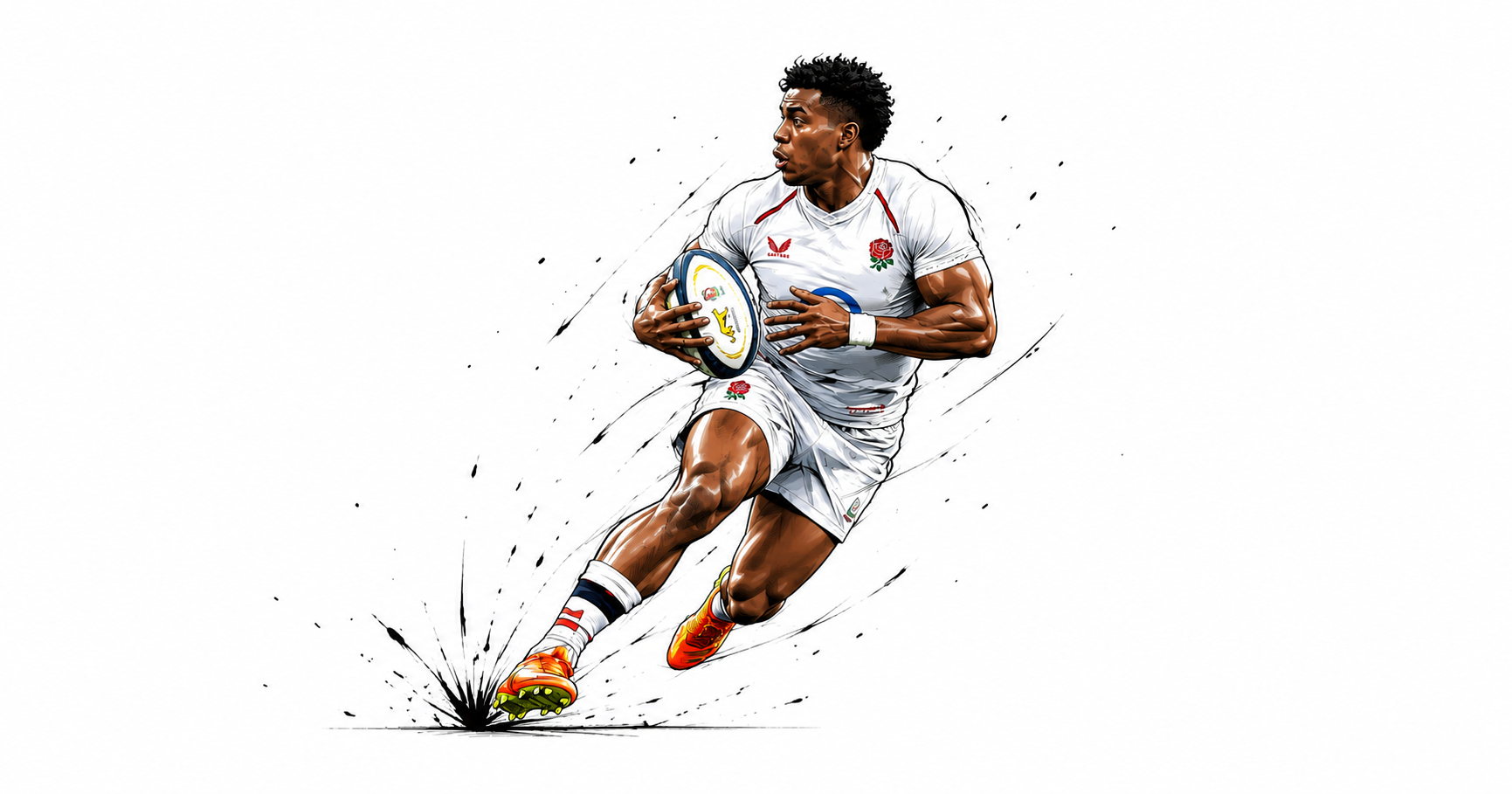
Ben Earl, at the centre of both England’s first-half surge and its second-half rearguard action, produced one of England’s defining performances. His two first-half tries established the platform for victory, while his carrying and defensive work remained influential as England navigated prolonged periods with reduced numbers. His contribution must be highlighted as central to England surviving Argentina’s late comeback. Immanuel Feyi-Waboso was named Player of the Match, adding to Earl’s influence and Freeman’s early impact in an England performance shaped by individual contributions under pressure.
For Argentina, the tournament ends with one win from three, having also lost to Scotland in the opening round before beating Wales. Pablo Matera remained central to their second-half resurgence, leading the intensity of the forward effort as Los Pumas clawed back much of England’s early advantage. Felipe Contepomi’s post-match reaction centred not on that improvement but on his frustration with what he described as England’s lack of respect through their post-match celebrations, a complaint that led to a brief and tense conclusion to his press conference. Argentina produced the stronger second half, but the deficit created before the break ultimately proved too great to overcome.
Strip away the seven yellow cards and the TMO drama, and the shape of this match is a simple one — England were the better team for forty minutes and Argentina were the better team for the other forty, with the team that went first ending up with just enough in the bank to survive. What made it compelling was how little daylight was ultimately left between those two versions of the game, and how close England came to discovering that a nineteen-point lead, given away carelessly enough, can evaporate entirely.
Argentina
Starting: 1 Mayco Vivas, 2 Julián Montoya (c), 3 Tomás Rapetti, 4 Guido Petti, 5 Matías Alemanno, 6 Santiago Grondona, 7 Marcos Kremer, 8 Joaquín Oviedo, 9 Gonzalo García, 10 Tomás Albornoz, 11 Mateo Carreras, 12 Justo Piccardo, 13 Matías Moroni, 14 Bautista Delguy, 15 Santiago Carreras
Impact: 16 Ignacio Ruiz, 17 Boris Wenger, 18 Pedro Delgado, 19 Efraín Elías, 20 Pablo Matera, 21 Joaquín Moro, 22 Simón Benítez Cruz, 23 Lucio Cinti
England
Starting: 1 Ellis Genge, 2 Jamie George (c), 3 Joe Heyes, 4 Alex Coles, 5 George Martin, 6 Ollie Chessum, 7 Guy Pepper, 8 Ben Earl, 9 Jack van Poortvliet, 10 Fin Smith, 11 Immanuel Feyi‑Waboso, 12 Seb Atkinson, 13 Henry Slade, 14 Tommy Freeman, 15 Marcus Smith
Impact: 16 Luke Cowan‑Dickie, 17 Emmanuel Iyogun, 18 George Kloska, 19 Tom Curry, 20 Henry Pollock, 21 Ben Spencer, 22 Benhard Janse van Rensburg, 23 Noah Caluori
Venue: Estadio Único Madre de Ciudades, Santiago del Estero, Argentina
Kick‑off: 20:10 local (ART)
Attendance: ~42,000
Match Officials
Referee: Angus Gardner (Australia)
Assistant Referees: Nika Amashukeli (Georgia), Paul Williams (New Zealand)
TMO: Brett Cronan (Australia)