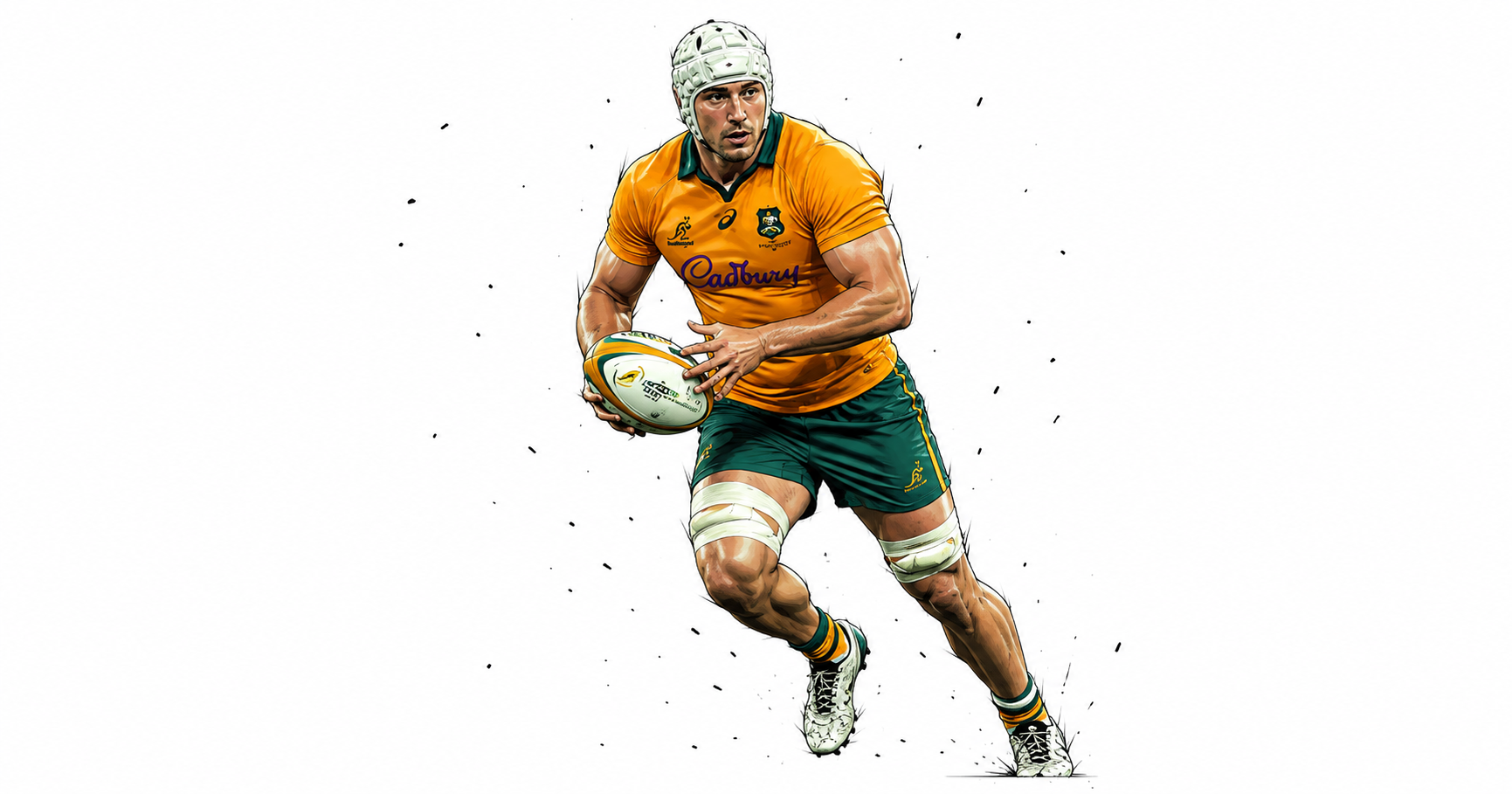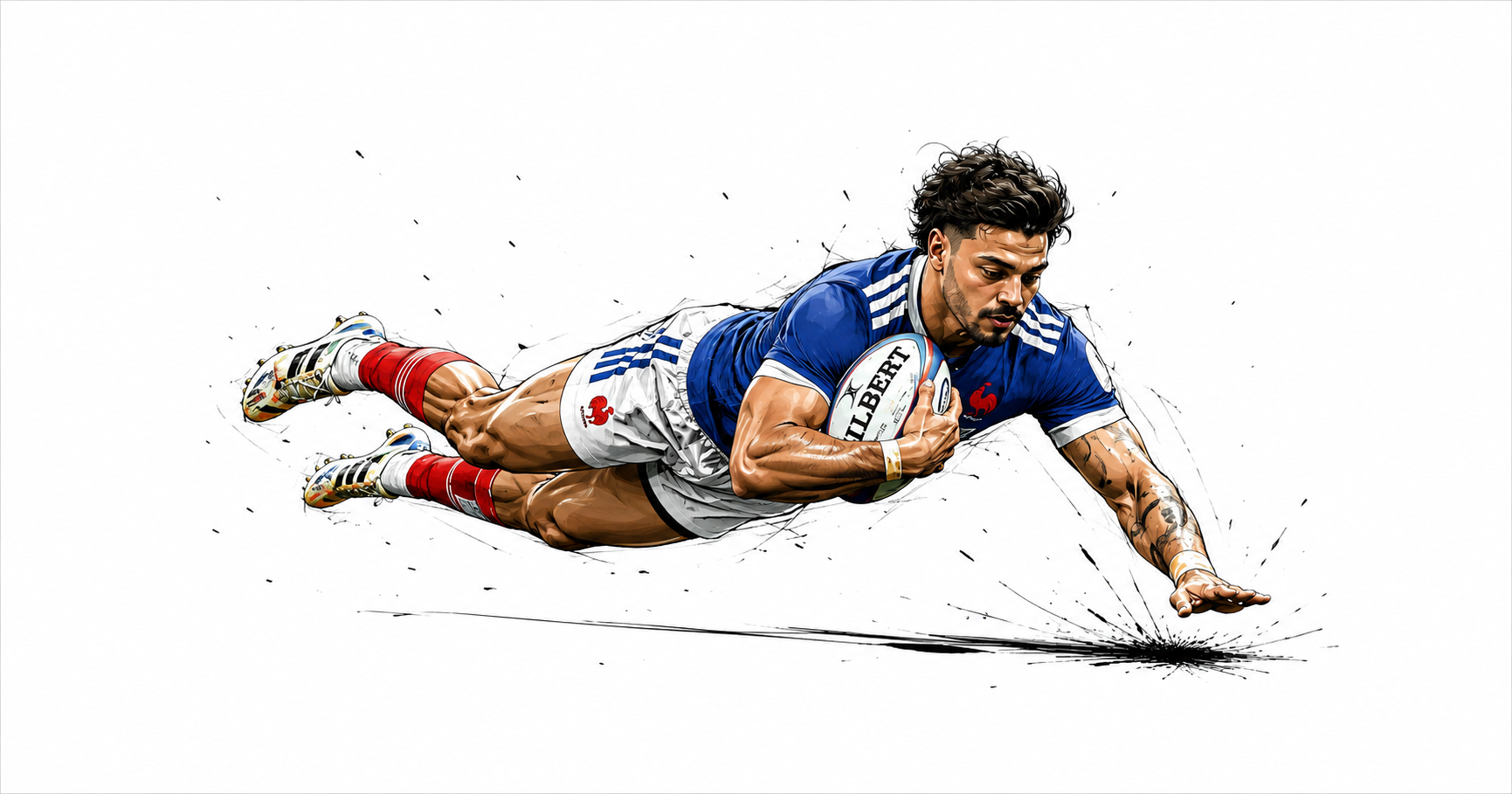
France’s Second-Half Storm Ends Australia’s Brisbane Hoodoo — and Exposes a Deeper Problem
France overturned a nine-point half-time deficit to beat Australia 42–26 at Suncorp Stadium on Saturday, scoring 30 unanswered points after the break. It was France’s first win of the 2026 Nations Championship and their first Test victory in Brisbane since 1972. It was also France’s largest recorded winning margin over the Wallabies on Australian soil. For Australia, the collapse extended a run of six consecutive Test defeats and marked the second successive match in which a half-time lead had disappeared entirely.
The scoreline disguises the extent to which this was a game of two halves. Australia led at half-time, but France dominated the second half and turned a nine-point deficit into a 16-point victory.
| Australia | France | |
| Half-time Score | 21 | 12 |
| Final Score | 26 | 42 |
| Tries | 4 | 6 |
| Second Half | 5 | 30 |
A First Half Built on Platform
Australia’s early control had nothing accidental about it. France struck first through Emmanuel Meafou inside two minutes, but the Wallabies responded from the set piece rather than through broken play. Brandon Paenga-Amosa’s converted try came directly off a driving maul, the kind of low-risk, high-percentage score that suggested a team playing to its strengths. That platform held. When Meafou was sin-binned in the 24th minute for a first-half infringement, Australia made the extra man count immediately. Fraser McReight scored twice in the space of seven minutes, with the second coming after sustained pressure rather than a broken-field burst. The sequence showed a pack imposing itself rather than a backline improvising. By the half-hour mark Australia led 21-12, built on a functioning lineout, a maul that worked as advertised, and a loose forward in McReight playing the game of his life.
The Ten Minutes That Turned It
In the 50th minute, Tom Wright was shown a yellow card just as France’s momentum was cresting. The extra-man advantage proved to be a turning point in the contest. Australia’s collapse cannot be reduced to one refereeing decision, and no single source attributes the result to that ten-minute passage alone, but the timing mattered more than the card itself. Five minutes earlier, Maxime Lucu’s penalty had trimmed the gap to six, and Aaron Grandidier-Nkanang’s second try of the afternoon had brought France within a point. Wright’s sin-binning coincided with the moment France seized the lead for good. Romain Ntamack crossed two minutes into the resulting numerical advantage, and France did not relinquish the scoreboard again.
Why France’s Second Half Overwhelmed Australia
The 30-5 second-half scoreline reflects a team that solved the game rather than simply outlasted it. France’s forward pack, reinforced from the bench, increasingly dominated the breakdown after the interval — contesting the ball more effectively, reloading defensively faster, and steadily degrading the quality of Australian ruck ball. That breakdown control fed directly into territory. France repeatedly forced Australia to start possessions deep inside their own 22, a pattern that pushed the Wallabies into a kicking game that returned to sender more often than it built pressure.
The bench was central to that shift. France’s replacements lifted the physicality and helped sustain their attacking tempo through the final quarter, while Australia’s replacements could not counter the impact. Discipline became another factor as the match wore on. Meafou’s first-half card was an isolated lapse, but Australia began conceding penalties during prolonged defensive sequences as France kept them pinned in their own half. That shift had faces attached to it as well as numbers. Grandidier-Nkanang punished it from the right wing, finishing with two tries as France’s field position kept putting him in space; Ntamack, once his side had the lead to manage, took over directing the shape and territory that kept Australia pinned back; and Lucu’s boot (three conversions and two penalties for twelve points) made sure the scoreboard kept moving whenever the tries dried up. Australia’s contributions, by contrast, belonged almost entirely to the opening forty: McReight’s brace, Paenga-Amosa’s maul try, and Ryan Lonergan’s control of the early attack, capped by three successful conversions.
A Pattern, Not an Accident
For Australia, the more troubling story is not this individual defeat but its shape. The pattern was similar to the previous week’s 33–31 loss to Ireland, with another lead surrendered. Captain Harry Wilson said as much afterward: “We’re learning that you need to play a good 80 minutes. We’re losing moments. We keep losing moments and a team like France put on 30 unanswered points and it’s not good enough.” He added: “We had some really good patches there… but we need everything working together to win these Test matches against the best teams in the world.”
Romain Ntamack, officially named Player of the Match, framed the win in almost identical terms from the opposite side of the result: “Really proud of the team. Very tough first half. Second half, we kept pushing and it paid off. Really happy with the second half.” Two accounts of the same 80 minutes arrived at opposite conclusions — one side’s second-half discipline was the mirror of the other’s second-half collapse.
Own the Breakdown
The result keeps France alive in the Nations Championship table after an opening-round loss to New Zealand and gives them a platform heading into the next round. For Australia, the defeat drops them to 0-2 with only a match against Italy remaining for this leg of the competition, turning that fixture into a must-win test of whether Saturday’s pattern can be broken rather than merely diagnosed. Six defeats in a row is already a serious run of results; a seventh, against opposition Australia would be expected to beat, would sharpen the scrutiny on Joe Schmidt’s side considerably as they transition into the Kiss era.
Brisbane had not seen a French victory since 1972. On this evidence, it is not the wait that should concern Australia, but the way France took control after half-time and left the Wallabies unable to fight their way back into the contest.
Australia
Starting: 1 Angus Bell, 2 Josh Nasser, 3 Allan Alaalatoa, 4 Josh Canham, 5 Jeremy Williams, 6 Rob Valetini, 7 Fraser McReight, 8 Harry Wilson (c), 9 Ryan Lonergan, 10 Declan Meredith, 11 Dylan Pietsch, 12 Len Ikitau, 13 Joseph Sua’ali’i, 14 Max Jorgensen, 15 Tom Wright
Impact: 16 Brandon Paenga‑Amosa, 17 James Slipper, 18 Taniela Tupou, 19 Lachie Shaw, 20 Nick Champion de Crespigny, 21 Tate McDermott, 22 Jock Campbell, 23 Filipo Daugunu
France
Starting: 1 Moses Alo‑Emile, 2 Peato Mauvaka, 3 Demba Bamba, 4 Florian Verhaeghe, 5 Emmanuel Meafou, 6 Lenni Nouchi, 7 Oscar Jégou, 8 Marko Gazzotti, 9 Maxime Lucu (c), 10 Romain Ntamack, 11 Aaron Grandidier, 12 Yoram Moefana, 13 Fabien Brau‑Boirie, 14 Théo Attissogbe, 15 Matthieu Jalibert
Impact: 16 Maxime Lamothe, 17 Jefferson Poirot, 18 Tevita Tatafu, 19 Hugo Auradou, 20 Tom Staniforth, 21 Killian Tixeront, 22 Nolann Le Garrec, 23 Kalvin Gourgues
Venue: Suncorp Stadium, Brisbane
Kick‑off: 17:40 local (AEST)
Attendance: 52,121 (99% capacity)
Match Officials
Referee: Karl Dickson (England)
Assistant Referees: Christophe Ridley (England), Katsuki Furuse (Japan)
TMO: Andrew Jackson (England)
FPRO: Glenn Newman (New Zealand)