Depth, Composure and a Ruthless Third Quarter: How South Africa Saw Off Scotland
South Africa’s 42–28 win over Scotland at Loftus Versfeld had, at various points, the shape of a rout, a shootout and a nervy finish. Through all three phases, though, the same pattern held. However much ground Scotland made up, South Africa always found another gear. The Springboks fielded ten changes from the side that beat England in Round 1 of the Nations Championship, and for a Test match against a Scotland side that had opened its own campaign with a win over Fiji, that represented a significant gamble on depth. It paid off. South Africa scored six tries to four, extended their winning run to ten Tests, and moved to two wins from two in the tournament. But the scoreline undersells how competitive this contest was for long stretches, and how close Scotland came to turning it into a genuinely tight finish.
Two Levels, One Recurring Gap
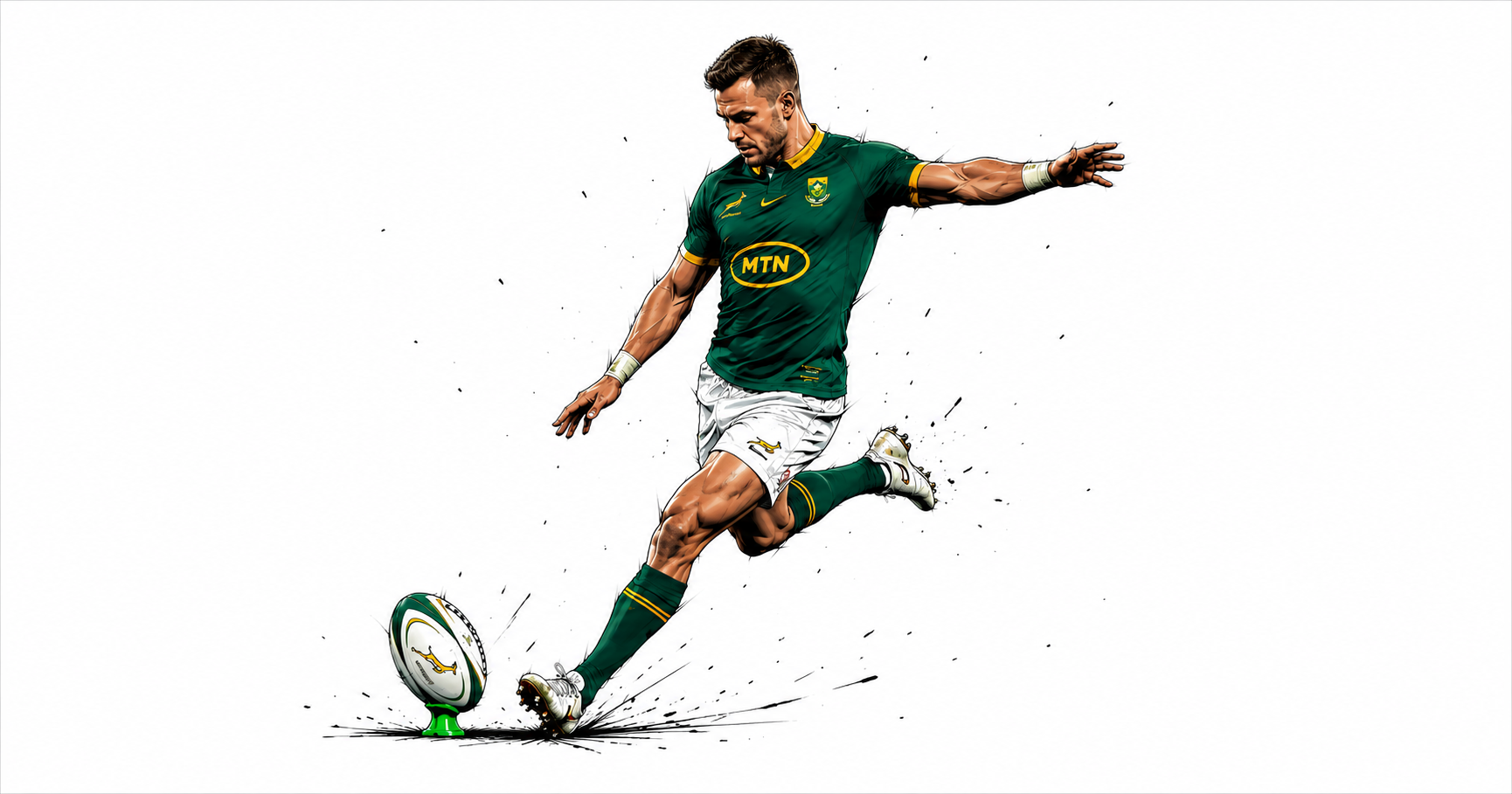
The match’s shape was set early. Embrose Papier, controlling the game’s rhythm and delivering the quick service that suited South Africa’s direct carrying game, opened the scoring inside seventeen minutes. Evan Roos, finishing off the kind of gain-line carry that had characterised the Springboks’ start, added a second try two minutes later. Both were converted by Handré Pollard, giving South Africa a 14–0 lead built on sustained pressure in the Scotland half. Pollard would finish the afternoon five from five off the tee and continue to direct South Africa’s attacking structure through their strongest periods. It looked, briefly, like the rout some had predicted.
Scotland’s response defined the rest of the half. Tries from Matt Fagerson in the 34th minute and Kyle Rowe right on the stroke of half-time, both converted by Finn Russell, pulled the visitors level at 14–14. Scotland’s territorial position had improved markedly, allowing them to turn defence into attack twice in the space of six minutes. For a side chasing its first win over the Springboks since 2010, parity at the break represented a real statement of intent.
What happened next is the reason this result will be remembered as routine rather than remarkable. South Africa scored three converted tries in an eight-minute spell after the interval. Elrigh Louw, Damian Willemse and Zach Porthen all crossed between the 58th and 66th minutes, with the replacement forwards adding fresh physical intensity to South Africa’s attack. The Springboks went from a level game to a 35–14 lead almost before Scotland could respond. It was the biggest momentum swing of the match. South Africa had just survived several minutes with fourteen men following Ben-Jason Dixon’s early second-half yellow card, giving Scotland their clearest numerical and territorial advantage of the game. Scotland applied pressure but could not turn it into points. South Africa emerged from that spell with the initiative and, within minutes, a match-defining lead.
Scotland’s Fight Without the Finish
To their credit, Scotland did not fold once the deficit reached 21 points. Josh Bayliss and Ben White scored in successive minutes either side of the 70-minute mark, both converted by Russell. The two tries cut the margin to seven points at 35–28 and gave Scotland a losing bonus point with time still on the clock. It was the latest example of a side that kept finding answers, just not quite enough of them, and not quite quickly enough. For a few minutes, an upset that had looked implausible at 35–14 was, at least mathematically, alive again. Jesse Kriel, continuing a strong run of international form, ended that possibility with eight minutes remaining, finishing a Springbok move to make it 42–28 and take the game beyond Scotland’s reach. The final scoreline of six tries to four, with both sides converting every try they scored, flattens a match that swung significantly at least three times. South Africa started fast, Scotland recovered to parity, and South Africa then produced a third-quarter surge that Scotland could narrow but never fully answer.
That pattern is worth dwelling on, because it is the clearest evidence in the match of where the gap between these sides actually lay. Scotland were not overwhelmed physically, nor picked apart by superior possession or territory. What can be said, from the sequence of events alone, is that South Africa converted more of their pressure into points, and did so more efficiently, particularly in that one telling passage after half-time.
A Rotated Side, an Unrotated Result
South Africa’s ten changes make the manner of victory more significant than the margin. Rassie Erasmus rotated heavily and still produced a performance built on six tries, sustained attacking pressure at two separate points in the match, and a ‘bomb squad’ that (as they do) added rather than subtracted. The replacement forwards who entered in the third quarter were directly involved in the spell that effectively won the game, with fresh legs contributing to the tries scored by Louw, Willemse and Porthen.
Scotland, by contrast, made only three changes and fielded a settled side featuring British & Irish Lions players Finn Russell, Zander Fagerson and Gregor Brown in the starting XV. That Scotland’s more experienced, less-rotated group still finished second in a match that was level at the break says as much about South Africa’s structural depth as it does about anything Scotland did wrong. This was not a case of a weakened Springbok side scraping past a Test-quality opponent; it was closer to evidence that, at present, South Africa’s system produces similar results regardless of personnel.
Own the Breakdown The context around this result is almost as significant as the result itself. South Africa’s win extended a ten-match winning streak and kept the world champions at two from two in the inaugural Nations Championship, while Rassie Erasmus’s 55th Test in charge made him the country’s longest-serving coach by matches taken charge of, surpassing Jake White’s 54 Tests. None of that milestone context changes what happened on the field, but it reinforces the broader picture the match itself suggested. South Africa’s depth allows them to make wholesale changes without losing their ability to win.
For Scotland, the takeaways are more mixed. They matched South Africa for large parts of the contest, twice closed a losing gap to single scores, and did enough to suggest the long wait for a win over the Springboks (stretching back to 2010) will not be solved by a lack of competitiveness. What cost them was concentrated in specific moments. Scotland failed to score while South Africa were down to fourteen men, then conceded three converted tries in the third quarter. By the time Scotland responded, the game had already swung decisively South Africa’s way. Those are the moments Gregor Townsend’s side will look back on, more than any sense of being outclassed over the full eighty minutes.
South Africa
Starting: 1 Boan Venter, 2 Johan Grobbelaar, 3 Wilco Louw, 4 Cobus Wiese, 5 Ruan Nortjé, 6 Paul de Villiers, 7 Pieter‑Steph du Toit, 8 Evan Roos, 9 Embrose Papier, 10 Handré Pollard, 11 Ethan Hooker, 12 Damian Willemse, 13 Jesse Kriel, 14 Edwill van der Merwe, 15 Aphelele Fassi
Impact: 16 Jan‑Hendrik Wessels, 17 Ntuthuko Mchunu, 18 Zach Porthen, 19 Vincent Tshituka, 20 Ben‑Jason Dixon, 21 Elrigh Louw, 22 Grant Williams, 23 Quan Horn
Scotland
Starting: 1 Pierre Schoeman, 2 Ewan Ashman, 3 Zander Fagerson, 4 Gregor Brown, 5 Scott Cummings, 6 Matt Fagerson, 7 Rory Darge, 8 Jack Dempsey, 9 Ben White, 10 Finn Russell, 11 Jamie Dobie, 12 Sione Tuipulotu (c), 13 Rory Hutchinson, 14 Kyle Steyn, 15 Kyle Rowe
Impact: 16 Gregor Hiddleston, 17 Rory Sutherland, 18 Will Hurd, 19 Max Williamson, 20 Josh Bayliss, 21 Magnus Bradbury, 22 Tom Jordan, 23 Stafford McDowall
Venue: Loftus Versfeld Stadium, Pretoria
Kick‑off: 17:40 SAST
Attendance: 45,053
Match Officials
Referee: Pierre Brousset (France)
Assistant Referees: James Doleman (New Zealand), Andrew Brace (Ireland)
TMO: Richard Kelly (New Zealand)
FPRO: Olly Hodges (Ireland)