
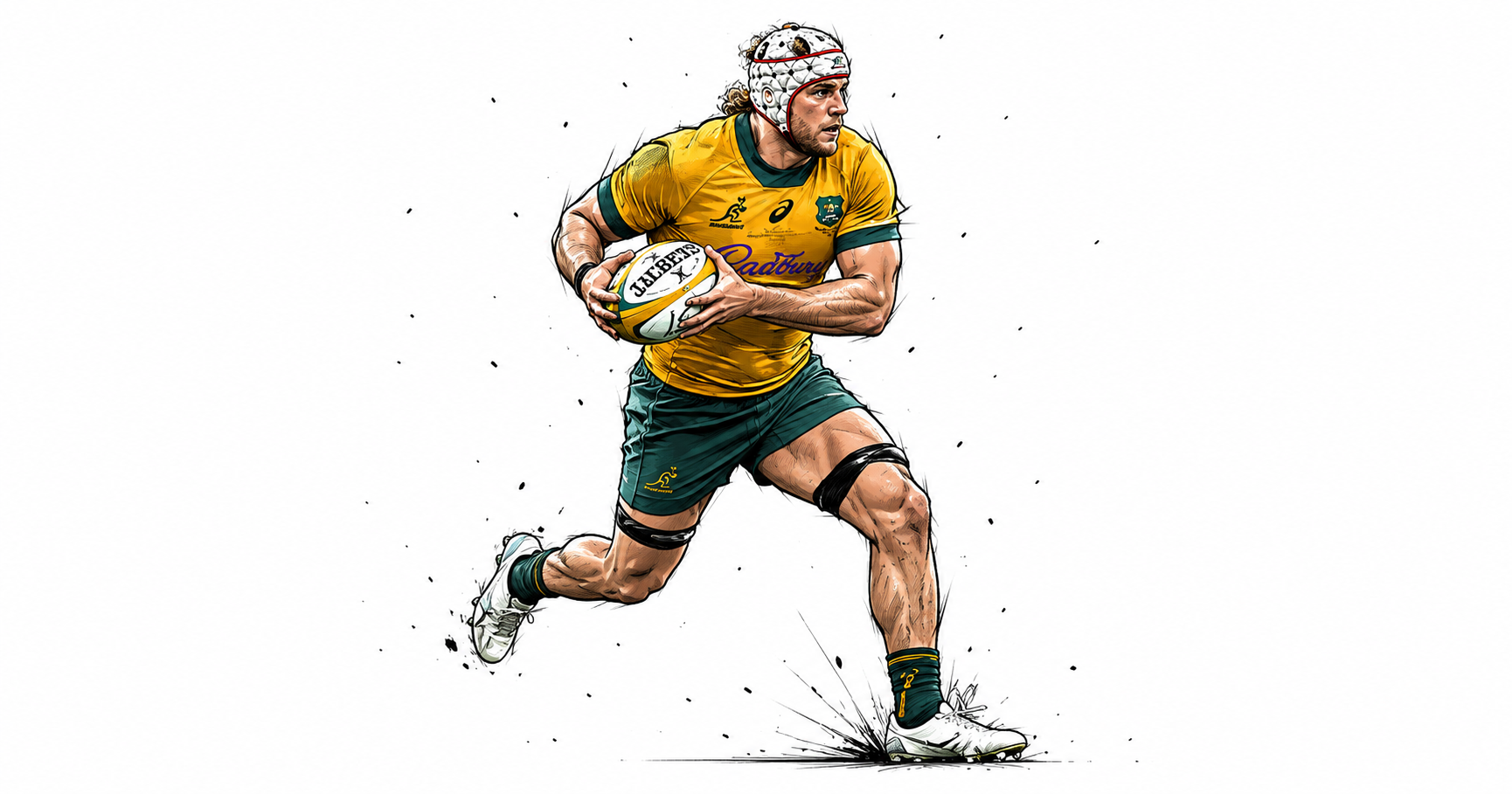
Australia Survive the Heat, the Red Card and Themselves to Beat Japan
Les Kiss wanted a start to remember. He got one, though not in the way any coach would draw it up. Australia’s new head coach began his tenure with a 35-32 win over Japan in the Lipovitan D Challenge Cup 2026 at Hanazono Rugby Stadium. But the shape of the contest owed less to any grand plan than to his team’s ability to survive its own mistakes: a 20-minute spell down to 14 men, a string of handling errors in the Osaka heat, and a Japanese side that came within one dropped ball of stealing the contest at the death. By full time, Australia had won consecutive Tests for the first time in a year and extended an unbeaten record against Japan to eight meetings. Despite the victory, Kiss and his captain, Harry Wilson, were both quick to acknowledge Australia’s shortcomings afterward.
A Fast Start Australia Couldn’t Contain
Japan set the tone early. Ryunosuke Itō opened the scoring in the 12th minute, finishing a break that started when Australia lost the ball following a Fraser McReight tap-and-go and a loose pass near halfway. It was the kind of turnover that Japan, playing with pace and precision at the breakdown, were primed to punish. Australia had just 35 percent of possession in the first quarter, reflecting Japan’s early control of the ball.
Declan Meredith’s exit kicking struggled to find touch in that period, repeatedly handing territory straight back to the home side. Australia did respond. Harry Potter finished a move built off Hunter Paisami’s footwork to level things by the 16th minute, before Tom Wright’s try from a lineout strike play put Australia 14-7 up by the 27th minute. But the pattern of the afternoon was already set. Australia would need to play through pressure, not away from it, for most of the evening.
The Card That Should Have Changed the Game
Any hope Australia had of controlling the contest disappeared in the 32nd minute, when lock Miles Amatosero was shown a yellow card for a dangerous clean-out involving Japan captain Warner Dearns — a card later upgraded to a 20-minute red before half-time. Australia would play the rest of the half, and the opening exchanges of the second, a man short.
Japan made them pay straight away. Faulua Makisi crossed in the 34th minute while Australia were still adjusting to 14 players. Takuro Matsunaga’s conversion brought the sides level at 14-14 by the break, the kind of scoreline that, on another day, might have unravelled a debutant head coach’s first Test. It didn’t. Kiss later credited his coaching staff and players for keeping their composure through that period, saying afterward that managing the team’s energy with 14 men was crucial to the eventual result. Whatever Australia lacked in territory during that spell, they did not lack in discipline of temperament, even as their discipline at the breakdown would resurface as a problem later in the match.
Composure Restored, Control Still Elusive
Australia came out of the sin-bin period and the interval with intent. Max Jorgensen finished a Joseph-Aukuso Suaalii offload in the 42nd minute to put the Wallabies back in front, and McReight’s close-range try seven minutes later stretched the lead to nine points. For a stretch, it looked as though Australia had turned the character test of the red card into momentum.
But the same fragility that let Japan into the game in the first quarter reappeared. Wilson was candid about it afterward, saying Australia pushed the pass too often in conditions he described as tough, with a soaked ball that punished ambition over control. Kiss echoed the sentiment, saying his side offered Japan a few too many opportunities and overplayed their hand at times. Angus Bell’s penalty for hands in the ruck and McReight’s for failing to roll away gave Matsunaga two shots at goal, both of which he took, dragging Japan back within three points by the 59th minute. Wilson also pointed to defensive lapses (passive tackling that let Japan generate quick ball) as part of the same pattern of a team still finding its identity under a new coaching staff. Kazuma Ueda’s try earlier in the half, scored within a minute of Australia’s Jorgensen score restoring parity briefly at 21-19, was a further reminder that Japan were never further than one score behind for most of the contest.
The Bench Made the Difference
If the story of the middle period was Australia’s inability to put the game away, the story of the closing quarter belonged to the players who came off the bench. Bell and Taniela Tupou provided fresh power in the heat, and it was Tupou who delivered the score that mattered most, finishing from close range around the 70th minute to push Australia’s lead back out to ten points at 35-25. Charlie Cale’s introduction was credited with lifting Australia’s tempo at a stage when fatigue, heat and the cumulative effect of playing a man light for 20 minutes might otherwise have worked against the visitors.
There was a personal milestone amid the closing substitutions, too. Isaac Henry came on to win his first Test cap and become Australia’s 999th men’s international player, with Ben Donaldson shifting to fullback and Suaalii moving to the wing to accommodate him — a small moment of history inside a match that had bigger things still to decide.
Japan’s Late Surge, and the Moment It Slipped Away
Even a ten-point cushion wasn’t enough to settle the contest. Warner Dearns, so central to the passage that led to Amatosero’s dismissal, scored his own try in the 78th minute after Japan repeatedly targeted the Australian line through lineout drives and pick-and-drive phases, cutting the gap to three points with Matsunaga’s conversion. Japan then had the ball back after Australia’s restart, working through several phases in search of a winning score that would have completed the biggest result in the fixture’s history for the home side.
It never came. Japan lost possession in the final seconds, with the decisive error attributed to veteran forward Michael Leitch. Australia held on to close out a 35-32 win. Eddie Jones, the Japan head coach, did not shy away from the disappointment afterward, saying his side had let themselves down with fundamental errors in the last 20 minutes when the chance to close the match out had been there, while praising the effort his players had put in across the 80 minutes.
Own the Breakdown
This was a result that flattered no one and told the truth about everyone. Australia won a Test they spent long stretches not controlling, surviving a red card, a wave of Japanese pressure, and their own indiscipline at the breakdown to get Kiss’s tenure off to a winning start. That they managed it owed as much to the impact of their bench, particularly Tupou’s try and Cale’s tempo, as to anything in the first 60 minutes. Both Kiss and Wilson were honest enough afterward to acknowledge the work still to be done before the second Test in Townsville, flagging execution, kicking and defensive discipline. Japan, for their part, leave Osaka still without a win over Australia after eight attempts, having been undone in the final seconds when a three-point deficit had become a genuine chance to win. The scoreboard says Australia are 1-0 up in this series. The performance says the gap between these two sides, on this evidence, is a great deal narrower than that.
Japan
Starting: 1 Takato Okabe, 2 Hayate Era, 3 Shuhei Takeuchi, 4 Jack Cornelsen, 5 Warner Dearns (c), 6 Ben Gunter, 7 Kanji Shimokawa, 8 Faulua Makisi, 9 Naoto Saitō, 10 Ryunosuke Ito, 11 Taira Main, 12 Samisoni Tua, 13 Dylan Riley, 14 Kazuma Ueda, 15 Takuro Matsunaga
Impact: 16 Mamoru Harada, 17 Sojiro Otsuka, 18 Keijiro Tamefusa, 19 Harry Hockings, 20 Michael Leitch, 21 Tiennan Costley, 22 Shunsuke Uenobo, 23 Yoshitaka Yazaki
Australia
Starting: 1 Aidan Ross, 2 Josh Nasser, 3 Allan Alaalatoa (c), 4 Josh Canham, 5 Miles Amatosero, 6 Rob Valetini, 7 Fraser McReight, 8 Harry Wilson, 9 Ryan Lonergan, 10 Declan Meredith, 11 Harry Potter, 12 Hunter Paisami, 13 Joseph‑Aukuso Sua’ali’i, 14 Max Jorgensen, 15 Tom Wright
Impact: 16 Billy Pollard, 17 Angus Bell, 18 Taniela Tupou, 19 Jeremy Williams, 20 Charlie Cale, 21 Tate McDermott, 22 Ben Donaldson, 23 Isaac Henry
Venue: Hanazono Rugby Stadium, Higashi‑Osaka
Kick‑off: 19:05 local (JST)
Attendance: ~30,000 (near capacity)
Match Officials
Referee: Eoghan Cross (Ireland)
Assistant Referees: Paul Williams (New Zealand), Morgan White (Hong Kong)
TMO: Richard Kelly (New Zealand)
FPRO: Matt Rodden (Hong Kong)